Handmade Luxury: Direct from Jaipur Carpet Studios to Your Home

JAIPUR CARPET STUDIO
ASK THE EXPERT
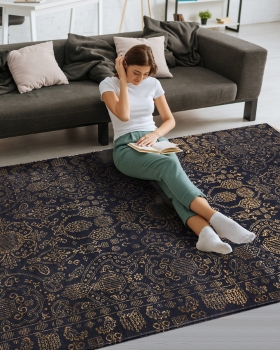
Rug Buying Guide — Luxury Comparison 2026
Wool vs Silk Rugs: Which Is Right for You?
When comparing wool vs silk rugs, the differences go far deeper than price. Durability, texture, knot density, care requirements, and long-term value all tell a completely different story for each material. This guide explains all 7 critical differences clearly.
By Jaipur Carpet Studio • Updated: 20 MAY 2026 •
“The choice between wool and silk is not about quality — both are extraordinary. It is about understanding your space, your lifestyle, and what you want a rug to do for you. Choose wrong and you will know it within a year. Choose right and you will pass it to your grandchildren.”
You have found the perfect space. The furniture is chosen. Now comes the centrepiece — the rug that will define the entire room. And at this point, almost every serious buyer faces the same question: wool or silk?
It is not a trivial choice. The wool vs silk rugs debate is one of the most discussed topics among interior designers, collectors, and luxury homeowners from London to Los Angeles. Each material has a distinct personality — and the wrong choice can mean a rug that looks wrong in your space, wears poorly, or simply does not deliver the investment value you expected.
At Jaipur Carpet Studio, we have spent over three decades hand-knotting both wool and silk rugs in our Jaipur workshops. We know these materials intimately — not from a catalogue, but from tens of thousands of hours of craft. In this guide, we break down 7 critical differences between wool and silk rugs so you can make the right decision with complete confidence.
Section 01
Durability: The Everyday Champion vs the Collector's Treasure
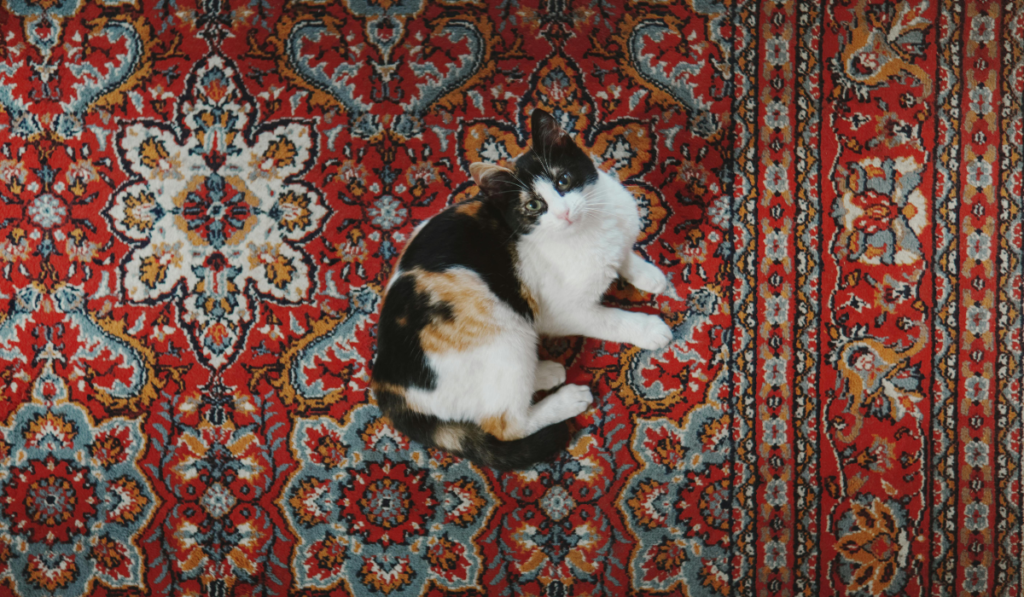
When it comes to the wool vs silk rugs durability debate, the difference is stark — and it matters enormously depending on where you plan to place your rug.
Wool rugs are among the most resilient floor coverings ever made. Natural wool fibres contain a protein called keratin, which gives each strand a natural crimp and spring. This elasticity allows wool pile to bounce back from foot traffic, furniture pressure, and general use for decades. A well-made Jaipur wool rug in a busy family living room will not only survive — it will develop a beautiful patina that actually improves its character over time. High-quality hand-knotted wool rugs regularly last 50 to 100 years, with antique examples from 150+ years ago still being bought and sold at auction.
Silk rugs, by contrast, are more sensitive to wear. Silk filaments are extraordinarily fine — thinner than a human hair — which is precisely what makes them capable of capturing such exquisite detail. But that same delicacy means silk pile compresses under heavy foot traffic and does not recover as readily as wool. This does not make silk rugs inferior — it simply means they are display pieces rather than floor workhorses. The finest silk rugs are often hung on walls or placed in formal rooms where foot traffic is minimal and their luminous sheen can be fully appreciated.
Wool Rugs
- Lifespan: 50–150+ years with normal use
- Traffic: Excellent — handles daily foot traffic
- With age: Develops beautiful patina, improves
- Best for: Living rooms, hallways, dining rooms
Silk Rugs
- Lifespan: Decades with careful placement
- Traffic: Moderate — pile compresses under heavy use
- With age: Retains beauty with proper care
- Best for: Bedrooms, studies, formal display
Our Verdict: For hallways, living rooms, dining rooms, or any high-traffic space — choose wool. For a bedroom, study, formal sitting room, or as wall art — silk is unmatched.
Section 02
Texture & Sheen: Warmth You Can Feel vs Luminosity You Can See
Touch tells you everything. Close your eyes and run your hand across a fine wool rug — you feel warmth, depth, and a satisfying resistance. Now touch a pure silk rug — it is almost liquid against the skin, cool and impossibly smooth, with a surface that seems to glow from within.
Wool rugs create warmth — visually and literally. Their natural crimped fibres trap air, giving wool excellent insulating properties that make rooms feel more comfortable in cooler climates. For UK homes especially, a wool rug in the living room adds a genuine thermal benefit alongside its visual warmth. The matte, tactile quality of wool anchors a room, creating a sense of groundedness and comfort that works beautifully in traditional, transitional, and modern interiors alike.
Silk rugs play with light in a way no other material can replicate. Due to the triangular prism-like cross-section of each silk filament, light refracts at multiple angles — creating a shimmering, colour-shifting effect known as lustre. Walk around a fine silk rug and the colours literally change: a deep burgundy becomes a warm copper; a midnight blue shifts to violet. This optical phenomenon is called chatoyancy, and it is unique to silk among rug materials.
Texture & Sheen at a Glance
Wool Rug Feel
- ◆ Warm, plush, matte finish
- ◆ Excellent thermal insulation
- ◆ Natural colour depth
- ◆ Cosy, grounded presence
Silk Rug Feel
- ◆ Cool, smooth, lustrous
- ◆ Light-refracting chatoyancy
- ◆ Colour shifts with viewing angle
- ◆ Dramatic, statement presence
Our Verdict: Wool for tactile warmth and everyday luxury. Silk for visual drama and spaces designed to impress. If your room has abundant natural light or well-positioned spotlights, a silk rug will be truly extraordinary.
Section 03
Knot Density & Detail: Why Silk Can Do What Wool Cannot
One of the most important — yet often overlooked — differences in the wool vs silk rugs comparison is KPSI: knots per square inch. This single number determines the level of detail, intricacy, and resolution a rug can achieve.
Because wool fibres are thicker, a skilled weaver working with wool typically achieves 80 to 200 KPSI in fine work. For the majority of decorative purposes, this is more than sufficient — wool rugs can render complex floral motifs, geometric patterns, and traditional medallion designs with impressive precision.
Silk, however, operates in a different dimension entirely. Due to the extreme fineness of silk thread, master weavers can achieve 300 to 1,000 KPSI — or even higher in museum-quality pieces. At 600+ KPSI, a silk rug can render photographic detail: individual feathers on a bird, the intricate veins of a leaf, subtle shading gradients that would be impossible in any other medium.
Key Insight: The most famous and valuable rugs in the world — the Hereke silks of Turkey, the Qum silks of Iran, and the finest Jaipur silk work — are always silk. The knot density allows artisans to achieve complexity of design that functions almost as textile painting.
Wool KPSI Range
80–200
Knots per square inch (fine work)
Ideal for bold florals, geometrics, traditional medallions, and contemporary designs.
Silk KPSI Range
300–1,000+
Knots per square inch (fine to museum quality)
Enables photographic-quality detail, pictorial scenes, and ultra-fine floral lacework.
At a Glance: Wool vs Silk Rugs Complete Comparison
| Feature | Wool Rugs | Silk Rugs |
|---|---|---|
| Durability | ⭐⭐⭐⭐⭐ Excellent (50–100+ yrs) | ⭐⭐⭐ Moderate (decorative) |
| Texture / Feel | Warm, plush, cosy | Cool, lustrous, refined |
| Knot Density (KPSI) | 80–200 KPSI | 300–1,000+ KPSI |
| Price Range (6×9 ft) | £800–£5,000 / $1,000–$6,500 | £2,500–£20,000+ / $3,000–$25,000+ |
| Best For | High-traffic living areas | Display, bedroom, low-traffic |
| Maintenance | Moderate — vacuum weekly | Delicate — professional clean only |
| Investment Value | High — appreciates with age | Very High — rare collectibles |
| Sheen | Natural matte depth | Luminous chatoyancy |
Section 04
Price & Value: Understanding What You Are Really Paying For
Price is often the first question asked in the wool vs silk rugs conversation — but it is almost never the right starting point. The better question is: what value does each represent?
Wool rugs offer extraordinary value at every tier of the market. A hand-knotted Jaipur wool rug in a 6×9 ft size typically ranges from £800 to £5,000 (approximately $1,000–$6,500 USD or CAD $1,300–$8,500). For this investment, you receive a piece that will last multiple generations, improve with age, resist stains and wear, and serve as the backbone of your interior design for decades.
Silk rugs command a significant premium, and it is entirely justified. A comparable 6×9 ft hand-knotted silk rug starts at approximately £2,500–£5,000 for medium quality, rising to £10,000–£20,000+ for museum-quality pieces with 600+ KPSI. What drives this price? First, raw silk is 6–8 times more expensive than wool by weight. Second, the extreme KPSI requires vastly more time to weave — a 6×9 ft fine silk rug may take two weavers 18–24 months to complete. Third, the expertise required to work with silk at high knot counts represents a lifetime of craft mastery.
Wool Rug Price Tiers
- Entry: £800–£1,500 (5×8 ft, 100–150 KPSI)
- Mid: £1,500–£3,000 (6×9 ft, 150–200 KPSI)
- Fine: £3,000–£8,000 (8×10 ft, Ghazni wool)
Silk Rug Price Tiers
- Entry: £2,500–£5,000 (4×6 ft, 300 KPSI)
- Fine: £5,000–£15,000 (6×9 ft, 400–600 KPSI)
- Museum: £15,000–£50,000+ (600–1,000 KPSI)
Section 05
Where to Use Each: Room-by-Room Placement Guide
The placement question is where the wool vs silk rugs decision often becomes clear. Once you map each material to the specific rooms and uses in your home, the right choice usually becomes obvious.
🏠 Living Room
Choose Wool. The living room demands durability above all else. Children, pets, guests, daily foot traffic — wool handles it all without deteriorating. A fine Jaipur wool rug in the living room is one of the best investments you can make.
🛌 Master Bedroom
Silk is exceptional here. Low foot traffic, morning and evening light, a space designed for beauty. A silk rug beside the bed creates an atmosphere of pure luxury that wool simply cannot match in this setting.
🍽 Dining Room
Always Wool. Spills, chair legs dragging, and constant use make the dining room the single worst location for a silk rug. Wool’s natural stain resistance and durability make it the only sensible choice.
📚 Study / Library
Either works beautifully. Light foot traffic and a contemplative atmosphere suit both. A wool rug adds warmth and intellectual gravitas; a silk rug adds luminous elegance. Choose based on your decor style.
🛎 Entrance / Hallway
Only Wool. The entrance is the highest-traffic area in any home. Never place a silk rug here. A bold, beautifully designed wool rug in the entrance sets the tone for your entire home.
🌟 Wall Display
Silk’s finest hour. Fine silk rugs are among the most beautiful objects you can display on a wall. Hung as textile art with proper mounting, a silk rug becomes the centrepiece of any room, never degrading from foot traffic.
Section 06
Care & Maintenance: How to Protect Your Investment
Care requirements are one of the most practically important differences in the wool vs silk rugs comparison. Be honest with yourself about how much maintenance effort you are willing to commit to.
Wool Rug Care
- ✓Vacuum weekly with low suction, no beater bar
- ✓Blot spills immediately; do not rub
- ✓Professional wash every 3–5 years
- ✓Rotate every 6 months for even wear
- ✓Use a quality rug pad underneath
Silk Rug Care
- ⚠Vacuum only with very low suction — or by hand
- ⚠Never wet-clean at home; silk distorts when wet
- ⚠Professional specialist clean ONLY, every 2–3 yrs
- ⚠Protect from direct sunlight (colours fade faster)
- ⚠Place in low-traffic, low-humidity environments only
Important: If you own pets, children under 10, or live a busy active lifestyle — silk is not the right choice for a floor rug. Be realistic. A beautiful wool rug that you can live freely with will bring far more joy than a silk rug you are constantly protecting.
The Final Word
Wool vs Silk Rugs: Which Is Right for You?
Choose Wool If You…
- ◆ Have children, pets, or an active lifestyle
- ◆ Need a rug for a high-traffic room
- ◆ Want a long-lasting heirloom piece
- ◆ Prefer bold, traditional, or geometric designs
- ◆ Want the best value for money
Choose Silk If You…
- ◆ Want a formal bedroom or display centrepiece
- ◆ Are furnishing a low-traffic, formal room
- ◆ Seek ultra-fine detail and intricate design
- ◆ Are buying as a collector or investment asset
- ◆ Want something truly unique and extraordinary
Both wool and silk are magnificent materials. The choice between them is not about which is better — it is about matching the extraordinary qualities of each material to the exact needs of your space and your life.
Frequently Asked Questions: Wool vs Silk Rugs
▼ Are wool rugs more durable than silk rugs?
▼ Why are silk rugs more expensive than wool rugs?
▼ Can you use a silk rug in a living room?
▼ What is the difference between wool and silk rug texture?
▼ Do wool or silk rugs hold their value better?
Ready to Choose Your Perfect Rug?
Whether you choose a fine wool rug for your living room or a lustrous silk piece for your bedroom, our Jaipur workshop crafts every rug by hand using techniques passed down over generations. Factory-direct pricing, full customisation, and shipping to UK, USA, Canada & beyond.
✓ Factory-direct from Jaipur ✓ Custom sizes & designs ✓ Express delivery to UK, USA, Canada ✓ Certificate of authenticity