Handmade Luxury: Direct from Jaipur Carpet Studios to Your Home

Rug Buying Guide

Hand Knotted vs Hand Tufted Rugs:
The Complete Honest Comparison

Before spending thousands on a rug, understand exactly what you’re buying. Every real difference — quality, durability, price — explained by Jaipur’s own craftspeople.

By Jaipur Carpet Studio18 April 2026

“You’ve found a rug you love. But somewhere in the description it says either ‘hand knotted’ or ‘hand tufted’ — and suddenly, you’re not sure if you’re about to make a great purchase or an expensive mistake.”

This confusion is completely normal. Even experienced interior designers sometimes use these terms interchangeably — which they absolutely should not. The difference between a hand knotted and a hand tufted rug is the difference between a rug that lasts 20 years and one that lasts 150 years. The difference between an heirloom and a household item.

At Jaipur Carpet Studio, we craft both types of rugs in our own Jaipur workshop. We’ve seen buyers thrilled with their choice — and buyers who wished someone had been more honest earlier. This guide is that honest conversation.

Section 01

What is a Hand Knotted Rug?

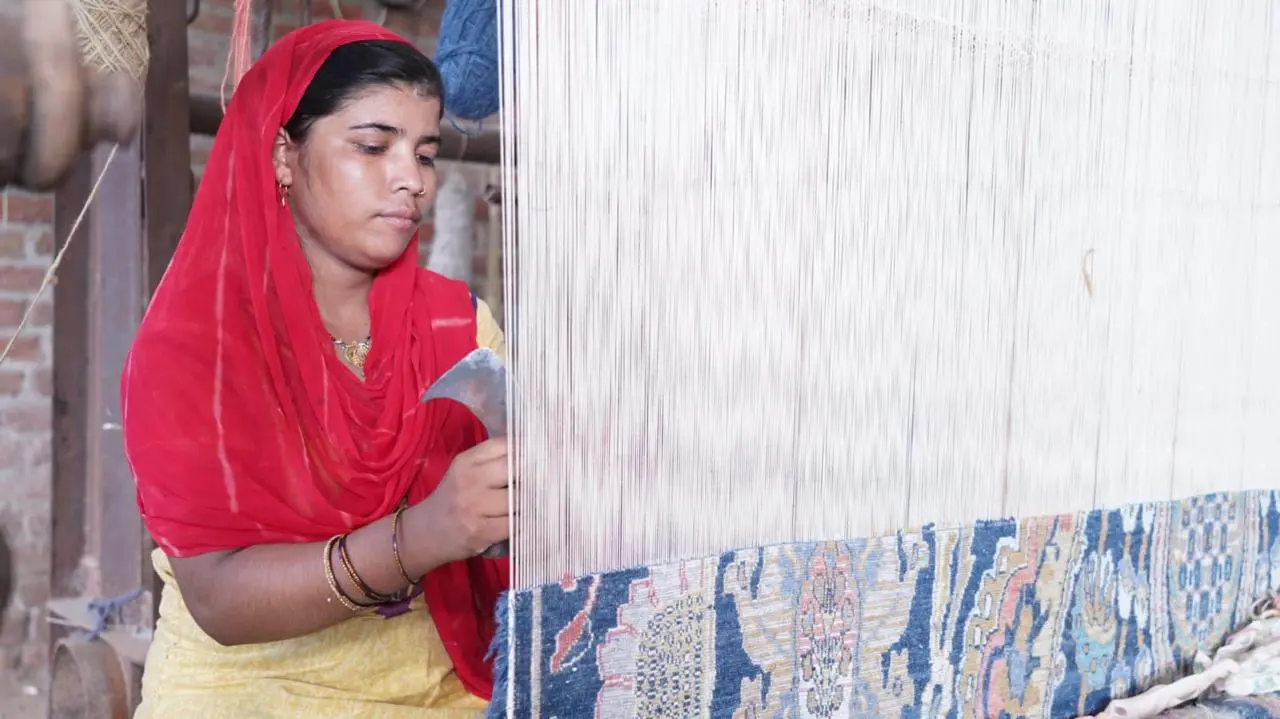
hand knotting process - hand knotted vs hand tufted rugs explanation
Artisan tying individual knots at Jaipur Carpet Studio

A hand knotted rug is made by tying individual knots — one at a time, by hand — around the warp threads of a loom. Each knot is a tiny loop of wool, silk, or cotton that a skilled weaver ties manually. After every row, a weft thread is passed through and the pile is beaten down tightly. Then the process repeats — knot by knot, row by row.

A single square foot can contain anywhere from 100 to over 1,000 individual knots. A 9×12 rug at medium density might take 3–4 weavers six to twelve months to complete.

Knot Density Explained (KPSI): Measured in Knots Per Square Inch. A good hand knotted rug sits at 100–300 KPSI. Fine Jaipur silk rugs can exceed 600 KPSI. Higher KPSI = finer detail + longer weaving time + higher value.

Turn a hand knotted rug over and you’ll see the pattern mirrored on the reverse — thousands of evenly tied knot tails. It looks almost as beautiful as the front. This is a hallmark you simply cannot fake.

Section 02

What is a Hand Tufted Rug?

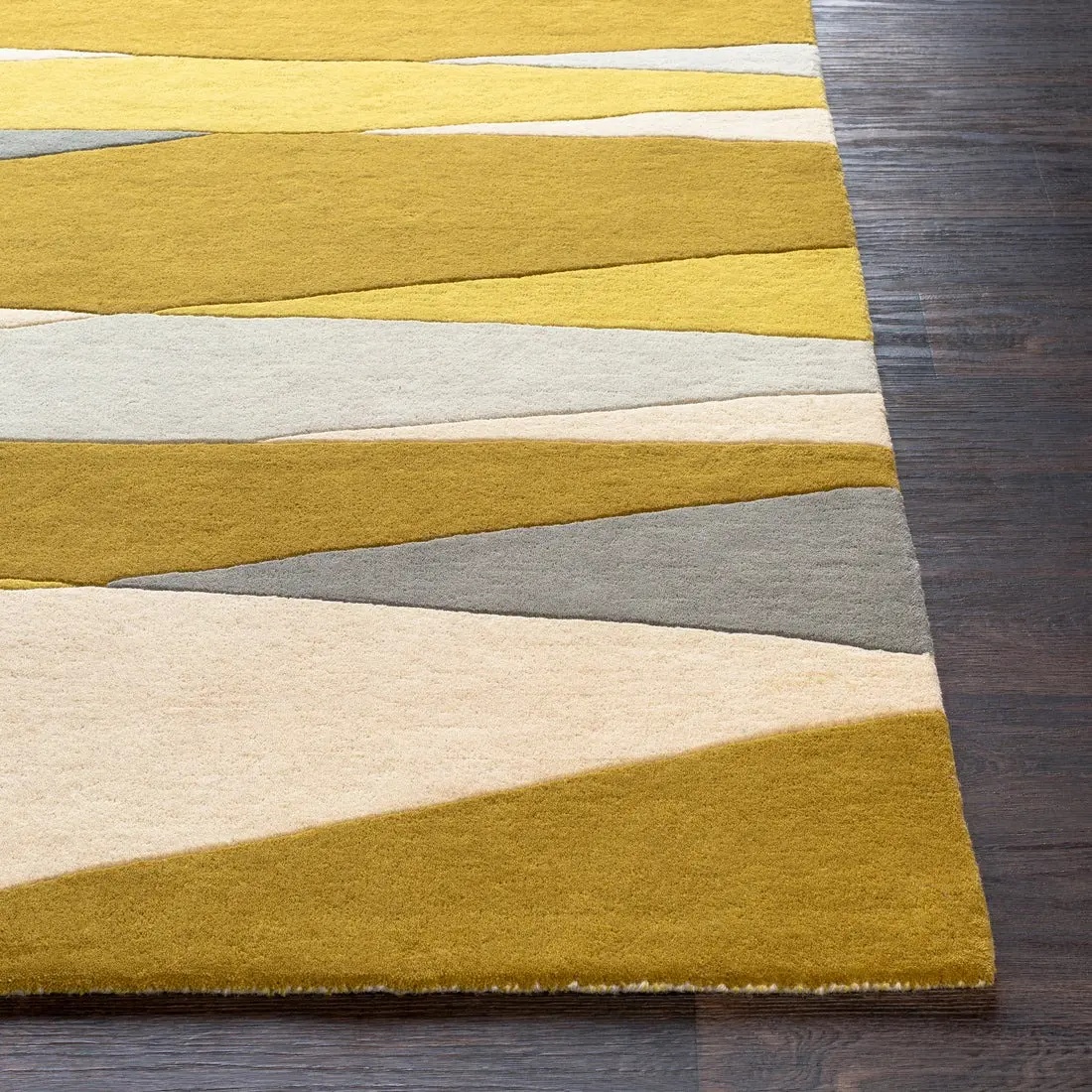
Hand Tufted Rug

A hand tufted rug is made using a tufting gun — a handheld tool that punches loops of yarn through a canvas backing stretched on a frame. Once complete, a latex backing is applied to hold the yarn, and a secondary fabric is glued over that. The word “hand” refers to the human operator guiding the tool — not to yarn being tied individually.

⚠ Common Misconception: Many sellers label hand tufted rugs as “handmade” — technically true but misleading. By the same logic, a cake baked with an electric mixer is “handmade.” When buying, always ask specifically: hand knotted or hand tufted?

This makes hand tufted rugs significantly faster to produce. A rug that would take weavers 6 months to hand knot can be completed by a tuft-gun operator in 1–2 weeks. That speed advantage directly explains the price difference.

Section 03

How Each Rug is Made: Step by Step

Hand Knotted Process
1

Warp threads are stretched vertically on a large floor loom

2

Weaver ties individual knots around pairs of warp threads by hand

3

Weft thread passed through after every row to lock all knots

4

Pile beaten down tightly with a metal comb tool

5

Repeated for months — sometimes years — until complete

6

Pile clipped, washed, stretched, sun-dried and finished

Hand Tufted Process
1

Design traced or projected onto a canvas stretched on a frame

2

Tufting gun punches yarn loops mechanically through the canvas

3

Operator guides tool across entire surface following the pattern

4

Loops are cut to create pile (or left looped for texture)

5

Liquid latex applied to back to secure all yarn tails in place

6

Fabric backing glued over latex; rug trimmed and finished

Section 04

Hand Knotted vs Hand Tufted: Side-by-Side

Feature Hand Knotted Hand Tufted
ConstructionIndividual knots tied by handYarn punched through canvas
Lifespan50–150+ years5–20 years
Price (8×10 ft)$800 – $10,000+$150 – $1,200
Time to Make3 months – 2+ years1–3 weeks
RepairabilityFully repairableDifficult / not possible
Resale ValueHigh — appreciatesLow — depreciates
Feel UnderfootFirm, dense, luxuriousSoft, cushiony, plush
SheddingMinimal after break-inModerate to heavy
Reverse SidePattern clearly visibleCanvas & fabric backing
VOC Off-GassingNone (no adhesives)Some (latex backing)

Section 05

Durability & Lifespan: The Honest Truth

Why Hand Knotted Rugs Last a Lifetime (or Several)

The structural integrity of a hand knotted rug comes from how its pile is attached. Every single knot is tied directly to the warp foundation — no adhesive, no glue, no secondary backing. The rug is one unified structure from pile to foundation. Antique Rugs of Jaipur from the 1800s are still in active use in homes and museums today.

The Latex Problem in Hand Tufted Rugs

Hand tufted rugs have one fundamental structural weakness: the latex backing. This holds all the yarn tails in place on the canvas. Without it, every tuft would simply fall out. And latex degrades — it dries, cracks, and crumbles, usually within 5–15 years. This process is called dry rot, and once it begins, the rug is finished. You cannot repair latex degradation.

📈 The Real Cost Over 50 Years

Hand tufted @ $300, replaced every 8 yrs$1,875+
Hand knotted @ $1,200, lasts 50+ yrs$1,200
You still have the rug at year 50Hand Knotted Wins

Section 06

Why Do Hand Knotted Rugs Cost More?

The price gap is not a luxury markup — it is a direct reflection of labour time. A standard 8×10 foot rug at 150 KPSI contains approximately 1.7 million individual knots. At a skilled weaver’s pace of 10,000–12,000 knots per day, that rug represents about 150 working days for one weaver.

1.7M
Individual knots in an 8×10 ft rug at 150 KPSI
150
Working days for one skilled weaver to complete it
50+
Years it will remain in your home if cared for

Factors That Affect Hand Knotted Price

Knot density (KPSI) — More knots = finer patterns + longer production time. Pile material — Silk costs more than wool; fine NZ wool costs more than standard. Natural dyes — Vegetable-dyed rugs command a premium and age more beautifully. Design complexity — A floral medallion with 20 colours takes far longer than a simple geometric. Origin — Jaipur, Isfahan, Tabriz are recognised centres that affect value.

Section 07

Which Type of Rug is Right for You?

There is no universally “better” rug type — only the right rug for your situation. Here is an honest guide:

Choose Hand Knotted If…
  • You want a rug still in your family in 50 years
  • Furnishing a living room, dining room, or master bedroom
  • You have pets or children needing a cleanable rug
  • You care about craftsmanship and supporting artisans
  • You see the rug as an investment, not just a purchase
  • Budget allows at least $600–800 for 6×9 or larger
Hand Tufted May Work If…
  • Decorating a rental, temporary, or guest space
  • You want ultra-soft texture not common in hand knotted
  • Budget is tight and you need something attractive now
  • Okay with replacing the rug in 8–12 years
  • The space has very low foot traffic

⚠ One Thing We Advise Against: Buying a hand tufted rug at a hand knotted price. If a seller asks $2,000+ for a hand tufted rug based on brand alone, that is a poor value proposition. At that price, genuine hand knotted craftsmanship is available — and will serve you infinitely better.

How to Tell the Difference In Person

Standing in front of a rug? Here are four quick checks any buyer can do without any special knowledge:

1

Flip It Over

Hand knotted: pattern clearly mirrored on the back. Hand tufted: canvas fabric and felt backing visible, no pattern.

2

Feel the Edges

Hand knotted edges are firm and structural. Hand tufted edges feel slightly soft or have visible binding tape.

3

Check the Fringe

Hand knotted fringe is the natural extension of warp threads — part of the rug. Hand tufted fringe is sewn on separately.

4

Smell & Bend Test

New hand tufted rugs may have a slight chemical smell from latex. Hand knotted rugs smell natural and bend cleanly.

Section 08

Frequently Asked Questions

Is a hand tufted rug really handmade?+
Technically yes, but the term is misleading. A human operator guides a tufting gun — but the tool mechanically inserts the yarn. No individual knot-tying skill is involved. A genuine hand knotted rug requires years of trained skill. Always ask specifically which construction method was used.
Can a hand tufted rug be repaired if damaged?+
Not meaningfully. The yarn tails are held purely by latex adhesive. Repairs require reapplying adhesive — which never holds as well and often looks patchy. When the latex degrades, the rug is finished. Hand knotted rugs can be repaired knot-by-knot to an indistinguishable standard.
Do hand knotted rugs shed?+
New hand knotted wool rugs shed for the first few months as loose fibres work their way out. This is normal and a sign of genuine wool content — not poor quality. Shedding reduces significantly after 3–6 months with regular vacuuming.
Why do some shops charge a lot for hand tufted rugs?+
Brand markup, design licensing, and high-end retail environments can push tufted rug prices very high. If you’re spending over $1,000 on a rug, always verify the construction method first. From a craft and longevity standpoint, a hand knotted rug at the same price offers significantly more value.
Are hand knotted rugs from Jaipur authentic?+
Jaipur is one of the world’s most significant centres for hand knotted rug production, with a tradition stretching over 400 years to the Mughal era. However, ‘Only Rugs from Jaipur’ is not a protected designation. Always verify construction method and, if possible, purchase directly from a manufacturer with a verifiable workshop.
What is the environmental difference?+
Hand knotted rugs made from natural wool or silk with vegetable dyes contain no synthetic adhesives, no latex, and no VOC-emitting chemicals. When their life ends — potentially 100+ years later — they biodegrade naturally. Hand tufted rugs contain petroleum-derived latex and synthetic backing, both non-biodegradable.

Crafted in Jaipur Since Generations

Ready to Own a Genuine Hand Knotted Rug?

Every rug we make at Jaipur Carpet Studio is hand knotted by master craftspeople in our own Jaipur workshop. We export directly to the USA, UK, Europe, and Australia — no middlemen, no markups.

✓ Direct from our Jaipur workshop  |  ✓ Custom sizes  |  ✓ Worldwide shipping  |  ✓ Certificate of authenticity